Scoring Everything from Dexter to Nurse Jackie: Pat Irwin and the Art of Listening
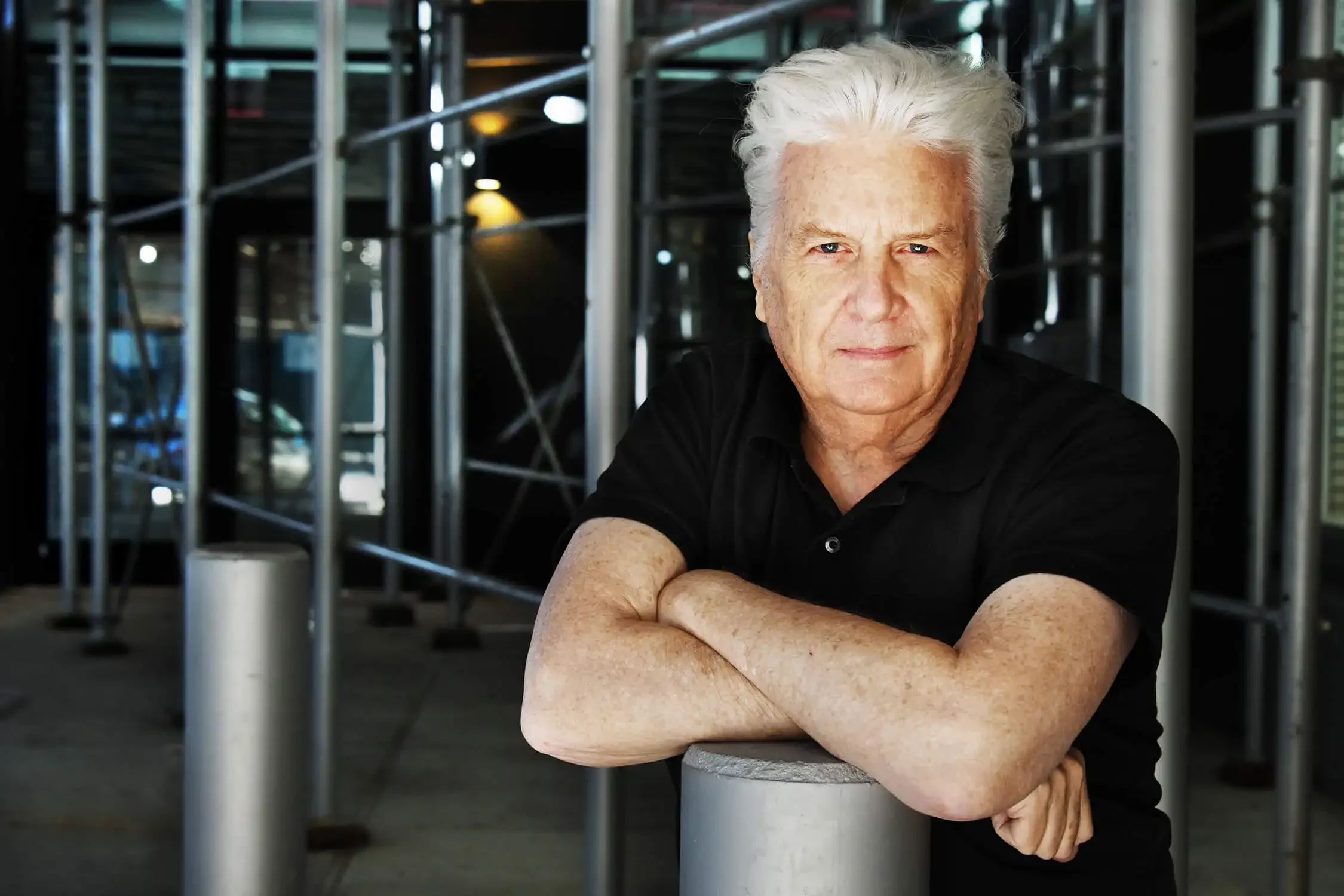
Pat Irwin - Film Composer
Scoring Everything from Dexter to Nurse Jackie
Pat Irwin and the Art of Listening
If you’ve felt unease settle into your chest during Dexter, sensed tenderness beneath the grit of Nurse Jackie, or smiled at the surreal humor of SpongeBob SquarePants and Rocko’s Modern Life, then you already know the work of Pat Irwin, even if you didn’t know his name.
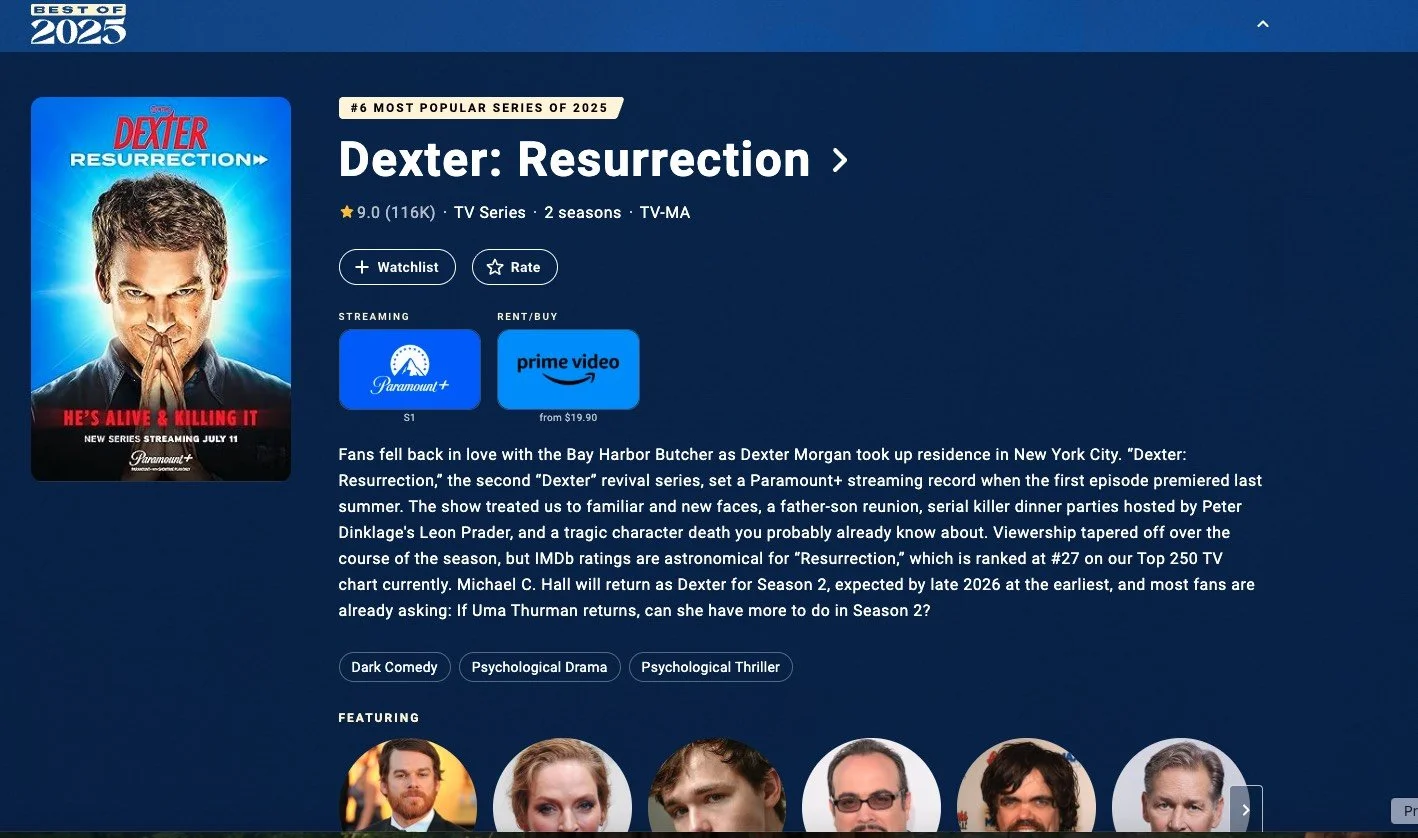
Dexter: Resurrection
Irwin’s music does not announce itself. It enters quietly, shaping emotional space rather than demanding attention. Across some of the most recognizable television of the past several decades, his scores have become inseparable from character, tone, and pacing. They guide the viewer not by telling them what to feel, but by listening closely to what the story already holds.
This instinct for restraint, placement, and story-first thinking has made Irwin one of the most respected composers in film and television. Most recently, his score for Dexter: Resurrection premiered in 2025, continuing a musical language that has become deeply embedded in the psychological world of the series. Even with such high-profile projects, Irwin’s approach remains grounded in humility. His music is not about spectacle. It is about service.
A Path Without a Map
Irwin’s journey into music was never conventional. He did not emerge from a conservatory pipeline or follow a prescribed compositional lineage. Instead, he studied American Studies at Grinnell College, drawn early to culture, history, and the larger questions that surround art rather than technique alone. Music was already part of his life; he was an active musician, and, at one point, the director of a Shape Note Sacred Harp choir, but it was not yet framed as destiny.
A turning point came when Irwin received a Thomas J. Watson Fellowship that took him to Paris to interview American expatriate jazz musicians. What began as an academic inquiry quickly became an immersion. In Paris, he encountered John Cage and attended one of his workshops, an experience that expanded his understanding of music as process, attention, and openness. He also met with Nadia Boulanger several times, engaging in extended conversations about music and composition that left a lasting impression through their rigor and clarity.
Together, these encounters did not prescribe a style; they opened a way of thinking. Music, Irwin realized, was not something to dominate or master in isolation. It was something to enter fully, to listen to, to respond to, and to live inside.
New York, Experimentation, and Refusal
After Paris, there was only one logical next step. Irwin moved to New York City in the late 1970s, when downtown music scenes were alive with experimentation and refusal. There, he became a founding member of the bands 8 Eyed Spy and The Raybeats projects united not by genre, but by an aversion to the predictable and the ordinary.
The Raybeats toured relentlessly and recorded multiple albums, while 8 Eyed Spy formed alongside Lydia Lunch, burned brightly and briefly before the death of bassist George Scott in 1980. In 2013, The Lost Philip Glass Sessions, collaborations originally recorded in 1982, were finally released, capturing a moment when boundaries between rock, minimalism, and experimental music felt fluid and provisional.
Writing in The New York Times, Robert Palmer once described Irwin as a “mercurial presence” on the New York rock scene of the early 1980s, noting that the bands he helped found resisted predictability at every turn. That resistance, quiet but firm, would later define his work for the screen.
Irwin’s current project, SUSS, continues this exploratory spirit. The ambient instrumental trio has released several albums on the Brooklyn-based Northern Spy label, with a new record, Counting Sunsets, scheduled for release in spring 2026.
From Bands to Screens
In 1989, Irwin joined the B-52s, touring and recording with the band through 2008. At the same time, he was steadily building a parallel career as a composer for film and television. Screen work offered a different kind of challenge, one that suited his temperament. For Irwin, scoring is not about foregrounding music, but about placement: knowing when to speak and when to step back.
His compositional process begins not with melody, but with observation, what the character is saying, what the image suggests, how the environment breathes, how time unfolds. “The score is about storytelling,” Irwin has said, and that belief governs everything. Music must stay out of the way of dialogue. It must respect pacing. It must never explain what the image already understands.
Among his favorite television scores, Peter Gunn, Mission: Impossible, and The Twilight Zone, he finds reminders that economy and memorability can coexist, and that discipline can still thrill.
Discipline, Collaboration, and Craft
Early in his career, when notation software was just beginning to emerge, Irwin wrote scores by hand. The process demanded patience and an intimate relationship with every note. Even now, with every technological tool available, that attentiveness remains central to his work.
Irwin thrives on collaboration. Each project reinvents his voice, yet his commitment to the work is unwavering. He gives himself fully to each score, understanding that the composer’s role is not to impose identity, but to respond. Success, for him, is not measured by accolades or visibility, but by the ability to remain creative, to stay curious across time.
Teaching the Art of Listening
Alongside his composing career, Irwin has become a deeply respected educator. He teaches film music composition at NYU’s Tisch School of the Arts and Music for Film and Television at CUNY Brooklyn College’s Feirstein School of Cinema. In the classroom, as in the studio, he emphasizes listening over display.
He does not offer formulas. He asks questions. He encourages students to think about story, pacing, and intention before reaching for sound. Creativity, he believes, grows not from certainty, but from attention.
Silence as an Answer
When asked what the soundtrack to his own life might sound like, Irwin offers an answer that feels perfectly consistent with his work. He would not want to write it himself. Perhaps that composer hasn’t been born yet. Or perhaps, he suggests, it would simply be silence.
It is an answer that reveals something essential. Pat Irwin has spent a lifetime shaping sound without insisting on being heard above it. He understands that music’s power often lies in what it allows: space, breath, possibility. If he were to leave behind a single sound, he says, it would be rhythmic and melodic freedom.
From animation to prestige television, Pat Irwin’s film and television work has helped define some of the most recognizable and beloved sound worlds of modern screen culture. From the psychological intensity of Dexter to the layered humanity of Nurse Jackie, the imaginative wit of Rocko’s Modern Life, and his contributions to SpongeBob SquarePants, his music elevates storytelling with clarity, depth, and lasting impact. Across decades of influential work, Irwin’s scores stand as a testament to the power of listening, music that enhances story, enriches character, and continues to resonate with audiences worldwide.