Erin Rogers and the Vanguard of Contemporary Performance
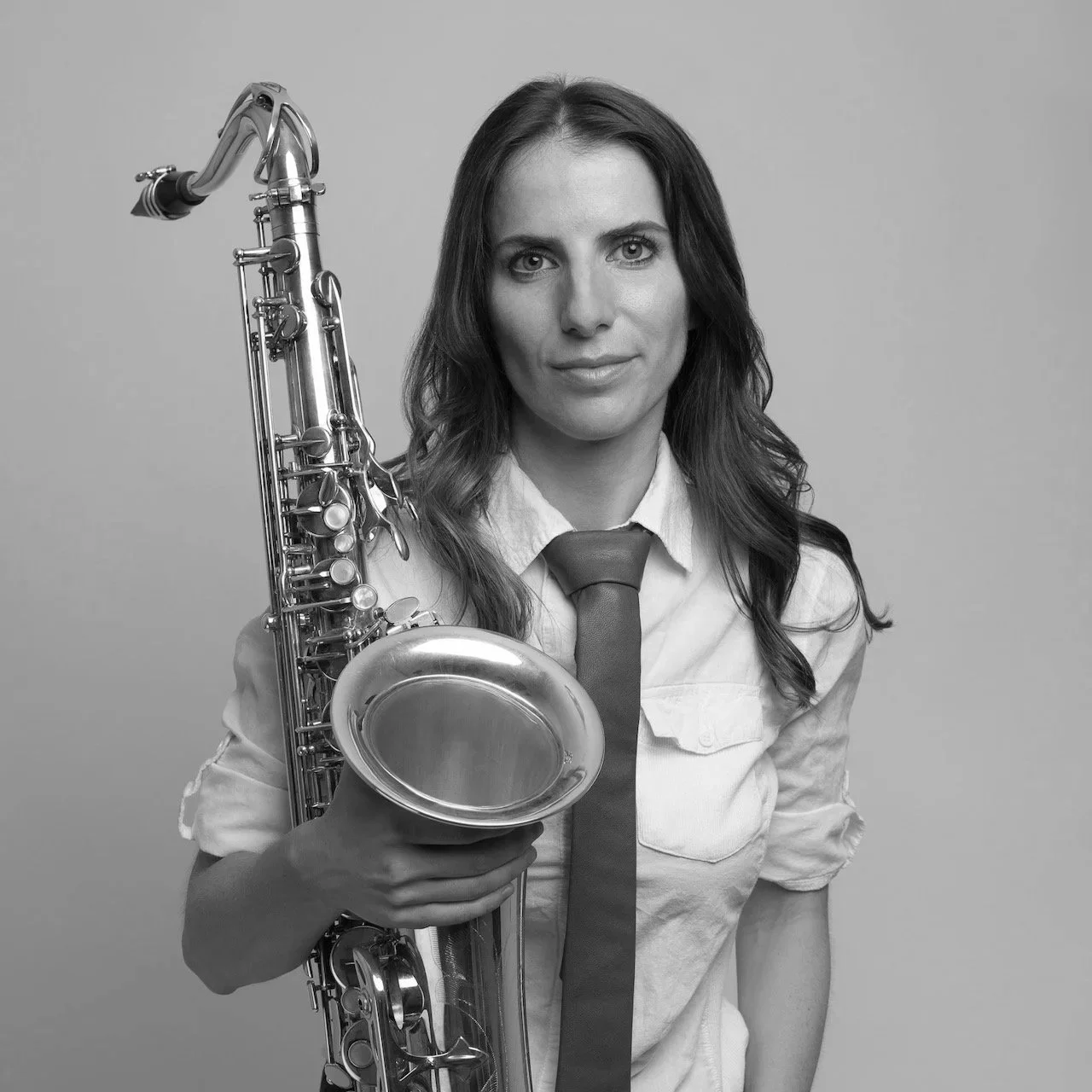
Erin Rogers - Saxophonist
Co-Artistic and Administrative Advisor of the Contemporary Performance Program
At the heart of one of the most forward-leaning graduate programs in American conservatories stands Erin Rogers, a performer, improviser, educator, composer, and, most importantly, a bridge between musical tradition and the contemporary landscape. Alongside Matthew Ward, she co-chairs the Contemporary Performance Program at Manhattan School of Music, a pioneering graduate program that continues to redefine what it means to train artists for the twenty-first century.
Her own practice, which ranges from chamber music to improvisation, theatre-infused composition, and electronics and text, mirrors the very ethos she instills in her students: to be fearless, versatile, and deeply engaged with the world of sound beyond the concert hall. Her leadership has not only shaped a curriculum but a community, one that views contemporary performance not as a niche but as an artistic necessity.
A Program Designed for Today’s Artist.
The Contemporary Performance Program (CPP) at Manhattan School of Music is the first of its kind among U.S. Conservatory schools, a graduate-level program (Master of Music in Contemporary Performance) dedicated to training artists to thrive at the forefront of new music. It asks its students to question, experiment, and innovate, preparing them not only to perform the music of today but to define the sound of tomorrow. Students engage with an extraordinary range of materials, from graphic scores to traditional notation, from extended techniques to live electronics, from the spoken word to visual and multimedia collaborations. This is not a program built on passive study but on active creation. Each project challenges students to find their own voice within a constantly evolving musical landscape.
Under the co-leadership of Erin Rogers and Matthew Ward, the CPP has produced some of the most influential new music ensembles of the last decade, including loadbang, MIVOS Quartet, The Rhythm Method, InfraSound, and others that have gone on to perform internationally, commission major works, and redefine the aesthetics of contemporary chamber music. These ensembles demonstrate the program’s unique success; it doesn’t simply train musicians; it launches artistic ecosystems. With only about thirteen students per cohort, the CPP maintains an intimate, collaborative environment that allows for deep mentorship and creative risk-taking. Students are encouraged to explore not only their instruments but also their roles as producers, curators, and collaborators. They emerge not just as performers but as artistic entrepreneurs, ready to navigate and shape the realities of today’s professional world.
The Artist at the Helm:
Erin Rogers’s own trajectory embodies the very ideals that the CPP nurtures. Born near Edmonton, Canada, she completed her undergraduate studies at the University of Alberta and later earned master’s degrees in both composition and performance from Bowling Green State University. Her professional path spans continents and genres: chamber concerts, experimental improvisations, site-specific installations, and cross-disciplinary collaborations.
She has performed at Lincoln Center, Carnegie Hall, Hamburg’s Elbphilharmonie, The Shed in New York City, and at international festivals such as MATA, Prototype, Ecstatic, and Resonanzraum. A versatile artist and creative force, she has been an essential member of ensembles such as thingNY, Hypercube, Popebama, New Thread Quartet, and Wild Up, groups that live at the intersection of experimentation and collaboration, redefining what it means to be a musician in the 21st century. Her compositional voice has been described as daring, theatrical, and imaginative, bridging classical discipline with the raw immediacy of performance art. This balance of rigor and inventiveness makes her an ideal leader for a program that demands both intellectual depth and creative courage.
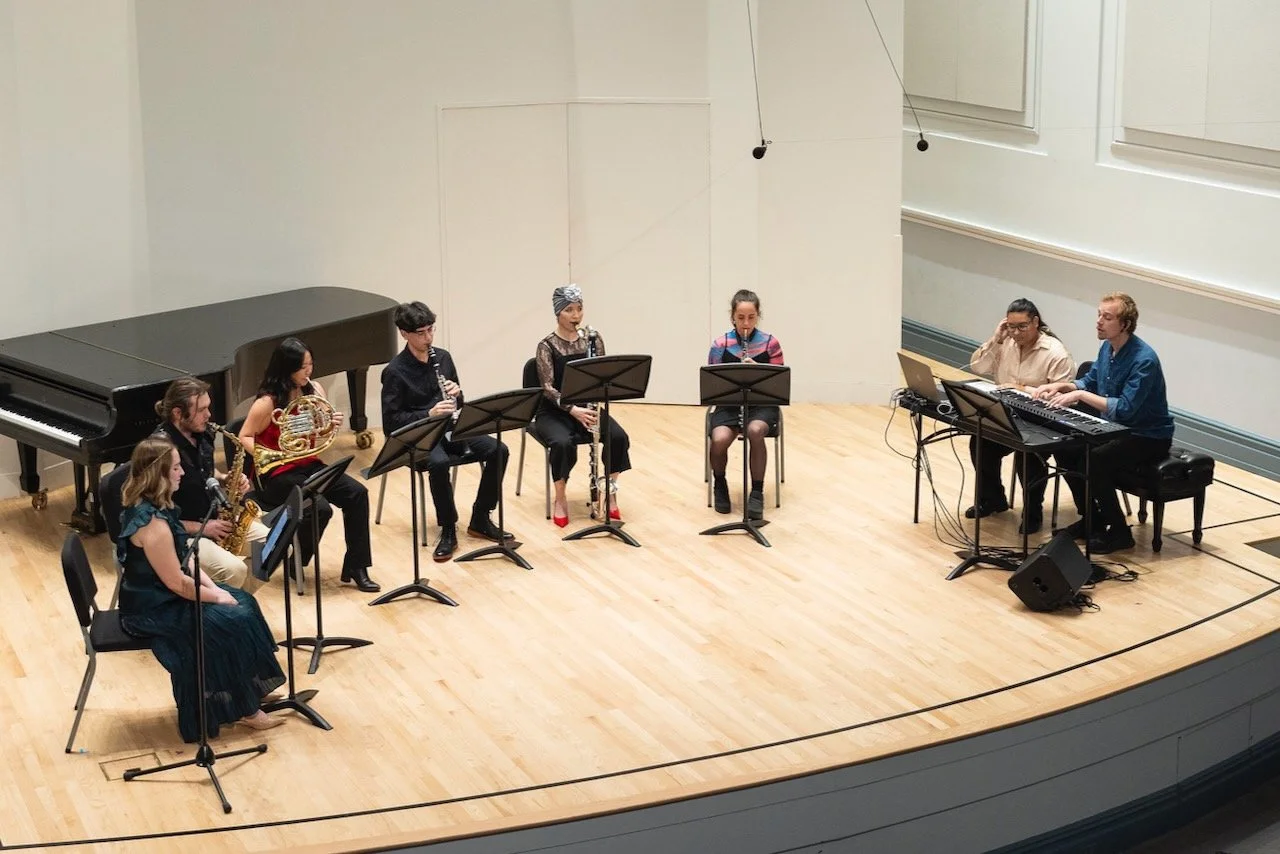
Tactus Ensemble
Leadership Rooted in Innovation.
At MSM’s Contemporary Performance Program, Rogers emphasizes that contemporary performance is not simply about mastering new techniques; it is about cultivating artistic agency. Students learn to use their craft as a form of communication, not confinement. The program integrates music, text, visual media, improvisation, and entrepreneurship to help students build sustainable careers that reflect both individuality and the realities of the modern arts ecosystem.
The curriculum is designed to reflect the fluid, interdisciplinary nature of contemporary music-making. Courses such as Performing with Electronics, Composer/Performer Project, and Advanced Practicum in Entrepreneurship are not electives; they are foundational experiences that prepare students to build careers at the intersection of art and innovation.
Global collaboration is also central to the CPP. Students participate in exchange projects with partner institutions in Europe, including performance residencies and cross-institutional commissions. They travel to partner schools in Germany and host visiting students from abroad, performing together and sharing cultural perspectives that enrich their artistry. This global mindset ensures that graduates of the CPP are not confined to a single city or scene; they are part of an international dialogue. They leave MSM prepared to lead, adapt, and create opportunities for others, embodying the future of music as a living, borderless art form.
A Vision Realized.
In Erin Rogers’s hands, the Contemporary Performance Program is far more than a degree; it is a philosophy. It represents the belief that the performer of today is not a passive interpreter, but an active participant in shaping the art form. Under her and Matthew Ward’s guidance, MSM’s CPP continues to produce artists who do not simply follow tradition; they extend it, interrogate it, and transform it.
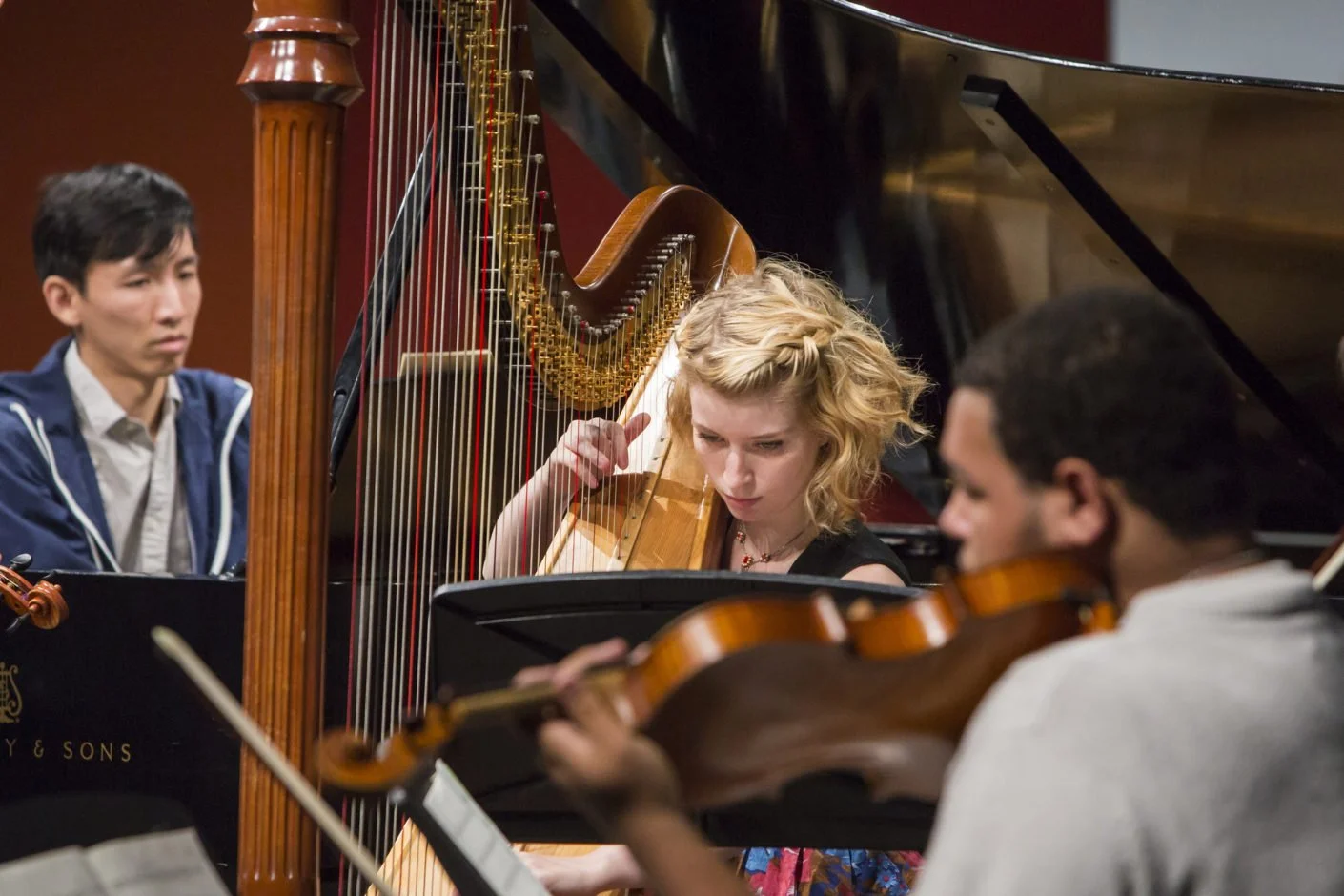
Tactus Ensemble
Rogers’s leadership is grounded in collaboration rather than hierarchy. She creates a space where risk-taking is encouraged, experimentation is celebrated, and individuality is essential. In her classroom and rehearsals, there is a palpable sense of freedom balanced with discipline, a respect for tradition balanced with a drive toward innovation. Students who pass through the program often describe it as transformational. They leave not only with mastery of their instruments but with a renewed understanding of what it means to be an artist in a global, rapidly changing world. They are adaptable, curious, and fearless, equipped not only to succeed but to lead.
Erin Rogers continues to be both guide and colleague, artist and educator, improviser and administrator. Her example reminds her students that leadership in the arts is not about authority, but about authenticity; it is not about control, but about connection. In a musical world defined by flux, the Contemporary Performance Program at the Manhattan School of Music stands as a model for how institutions can evolve without compromising their integrity. It reminds us that music education, at its best, is not about preserving what was, but nurturing what can be.
As the next generation of artists, ensembles, and innovators continues to emerge from the CPP, Erin Rogers’s vision resonates clearly: the contemporary performer is no longer on the fringes of the classical world; they are at its core, leading it forward with imagination, empathy, and unrelenting creativity.