Music shaped Kenny Sloan’s ear long before anything else began to organize his life.
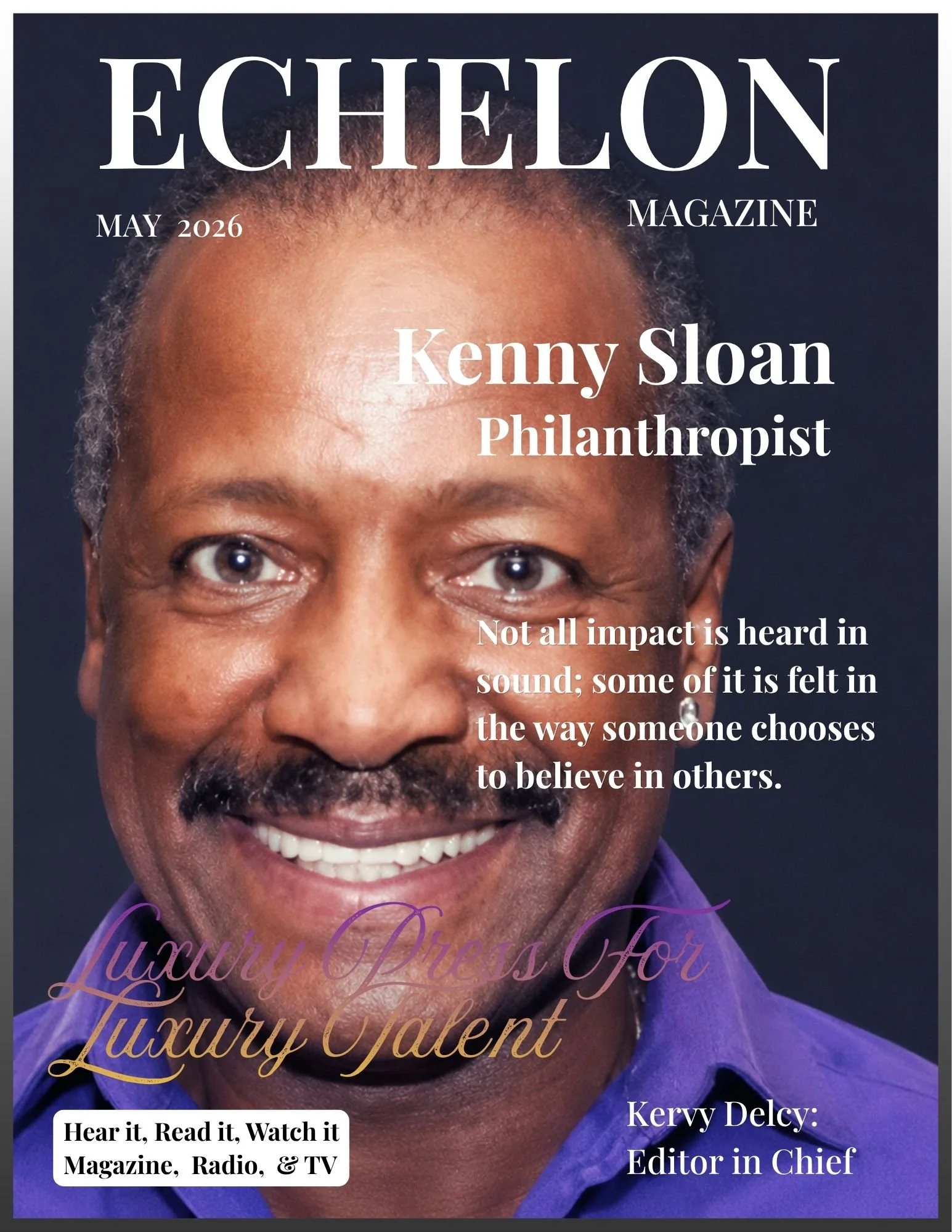
Music shaped Kenny Sloan’s ear long before anything else began to organize his life.
In his home, music never arrived as an event. It was continuous. His father worked in the record industry and ran a record shop in Times Square, later moving to J&R Records near City Hall. The house carried that same density of sound, records playing at all hours, not curated, not framed, simply present.
There was no hierarchy in what was heard. R&B sat next to jazz, jazz next to anything else that happened to be on the turntable. What mattered was not category, but attention. To listen fully, without deciding too quickly what belonged and what didn’t.
That habit stayed. Jazz became the center of gravity, but never a boundary. It became a way of hearing structure inside freedom, and freedom inside structure.
He grew up in Harlem in a working- and middle-income neighborhood where education shifted according to early recognition. In the third grade, he was identified as a gifted student. That label altered what followed: stronger classrooms, more invested teachers, and in some cases, teachers who personally funded entrance exams so students could access better schools.
That early intervention placed him in academic environments where music was both formalized and expanded. In junior high and prep school near Princeton, he entered choral programs where repertoire moved without apology between Negro spirituals and European choral works like Carl Orff’s Carmina Burana. The stylistic distance between these worlds was not explained as a contradiction. It was treated as coexistence.
He was not asked to choose between them. He learned to move through both.
An early moment of recognition of music came not through instruction but through observation. He remembers sitting in an audience as a child and hearing a saxophone solo that felt unusually complete. Not impressive in a technical sense, he could define at the time, but compelling enough to create a thought that stayed: what it would mean to be the one producing that sound rather than receiving it.
The thought remained dormant for years. When he eventually turned toward an instrument, it was the flute. The decision was unforced. He rented one first, intentionally avoiding commitment, simply to see whether the physical act of producing sound would hold his attention.
It did.
He progressed quickly enough that the rental became ownership. From there, learning was no longer exploratory in the abstract sense; it became embedded in routine practice, ensemble participation, and proximity to working musicians. His musical education expanded through direct participation in jazz environments rather than formal conservatory pathways alone.
He joined the Jazzmobile Orchestra, where teaching and performance often took place in the same space. He studied with Jimmy Heath, a member of the Heath Brothers, and later with Yusef Lateef through Jazz Interactions. These were not abstract mentorships; they were working relationships with musicians who treated instruction as a continuation of performance practice.
In college, he formed his own ensemble, Gypsy Cab. The group combined Afro-jazz performance with movement, percussion, and visual elements. It was not designed as fusion for its own sake, but as an extension of how he was already hearing music: as something that did not stay inside a single form.
The influence of artists like Sun Ra was present in this approach: the idea that performance could contain multiple simultaneous realities without reducing them to a single narrative. Philanthropy enters his life in a different register. Not as a separate identity, but as a response. He describes recognition as preceding explanation. When he supports a project, it is often because something in it feels structurally real before it is fully stabilized in public view.
In the case of the Carnegie Hall project that I did in 2024, support arrived early. The work was still forming, still under pressure of logistics and uncertainty. The contribution functioned less as endorsement and more as continuation, allowing something already in motion to remain in motion.
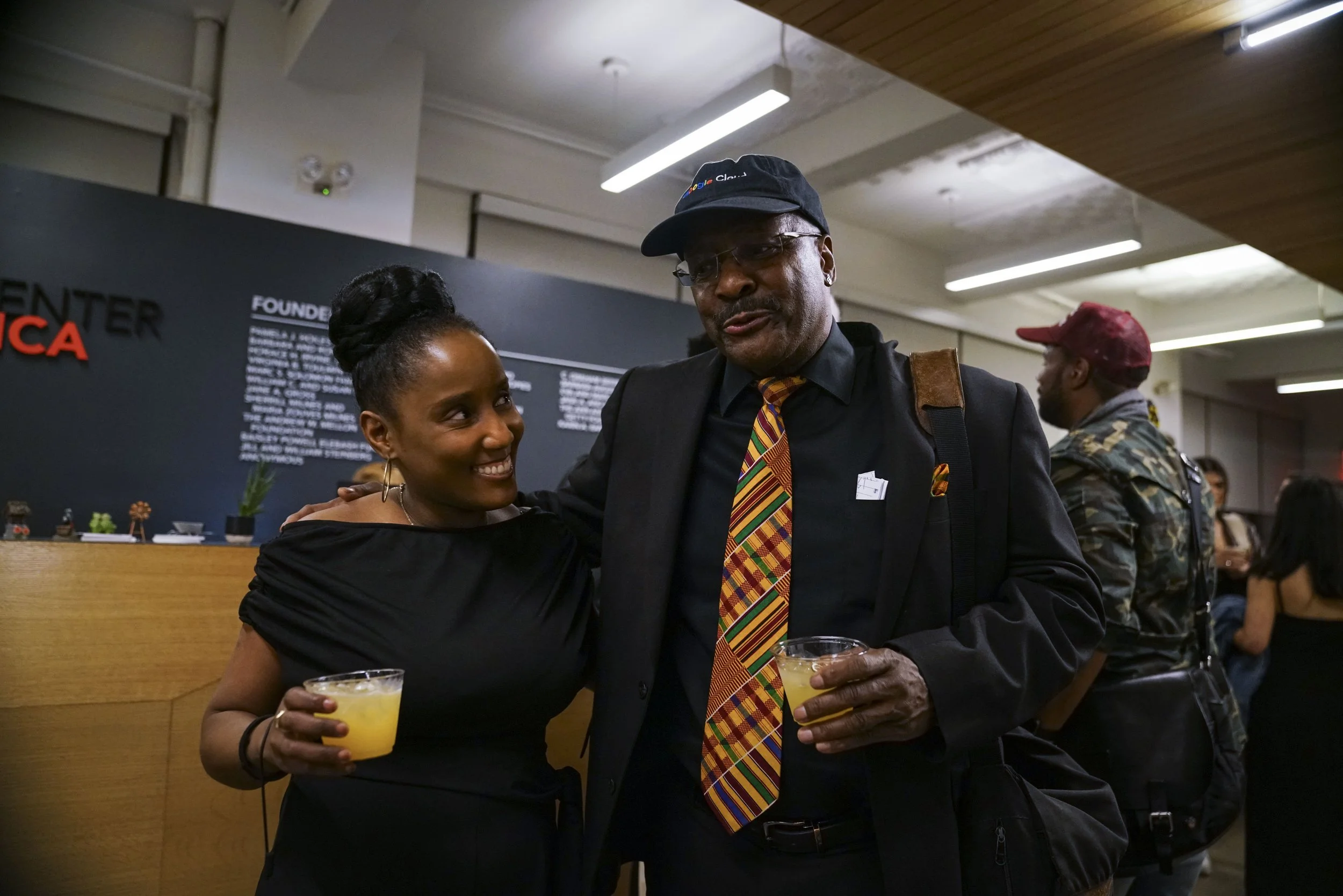
National Opera Center, October 2024
There is no language of distance in his description of this. Only proximity to intent. Kenny Sloan still plays flute. Not as a career extension. Not for visibility. He describes it as a private form of regulation, something closer to maintenance than performance. He plays in parks when time allows, often near the Hudson River. The setting is not symbolic in his framing. It is simply where sound can exist without demand placed on it.
In those moments, music returns to its earlier condition: uninterrupted, unmeasured, continuous. What remains consistent across his life is not a single genre or role, but a way of staying close to sound without separating it into categories of value too quickly.
Listening comes first. Action follows when something in those listening demands continuation. The rest is practice, returning to music, returning to attention, and responding when something asks not to end prematurely.