The Measure of Excellence
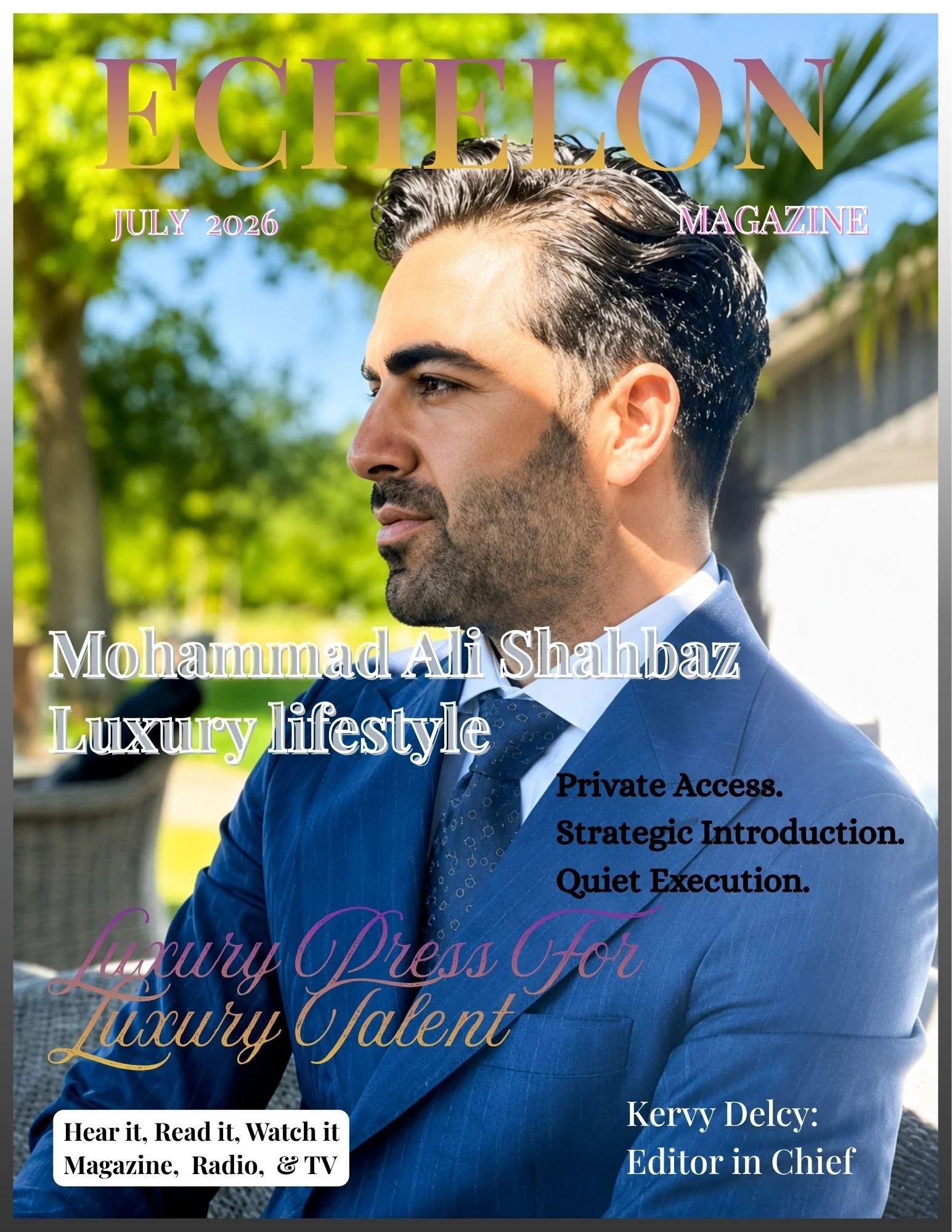
Mohammad Ali Shahbaz on Trust, Craftsmanship, and Building What Lasts
Luxury is often mistaken for extravagance. It is marketed through rarity, wrapped in exclusivity, and measured by price tags that seem to promise distinction. Yet the modern luxury landscape contains a quiet paradox: the most expensive experiences are not always the most personal, and the most exclusive services are not necessarily the most thoughtful. Somewhere between prestige and performance, luxury has become increasingly complicated, layered with coordination that can undermine the very ease it claims to provide.
That contradiction stayed with me while speaking with Mohammad Ali Shahbaz. Before our conversation turned to businesses, entrepreneurship, or long-term ambition, he offered a definition of luxury that felt unexpectedly restrained. Rather than speaking of wealth or exclusivity, he spoke of familiarity. “They should feel like home,” he explained. “They should have the feeling of familiarity, not the unknown.”
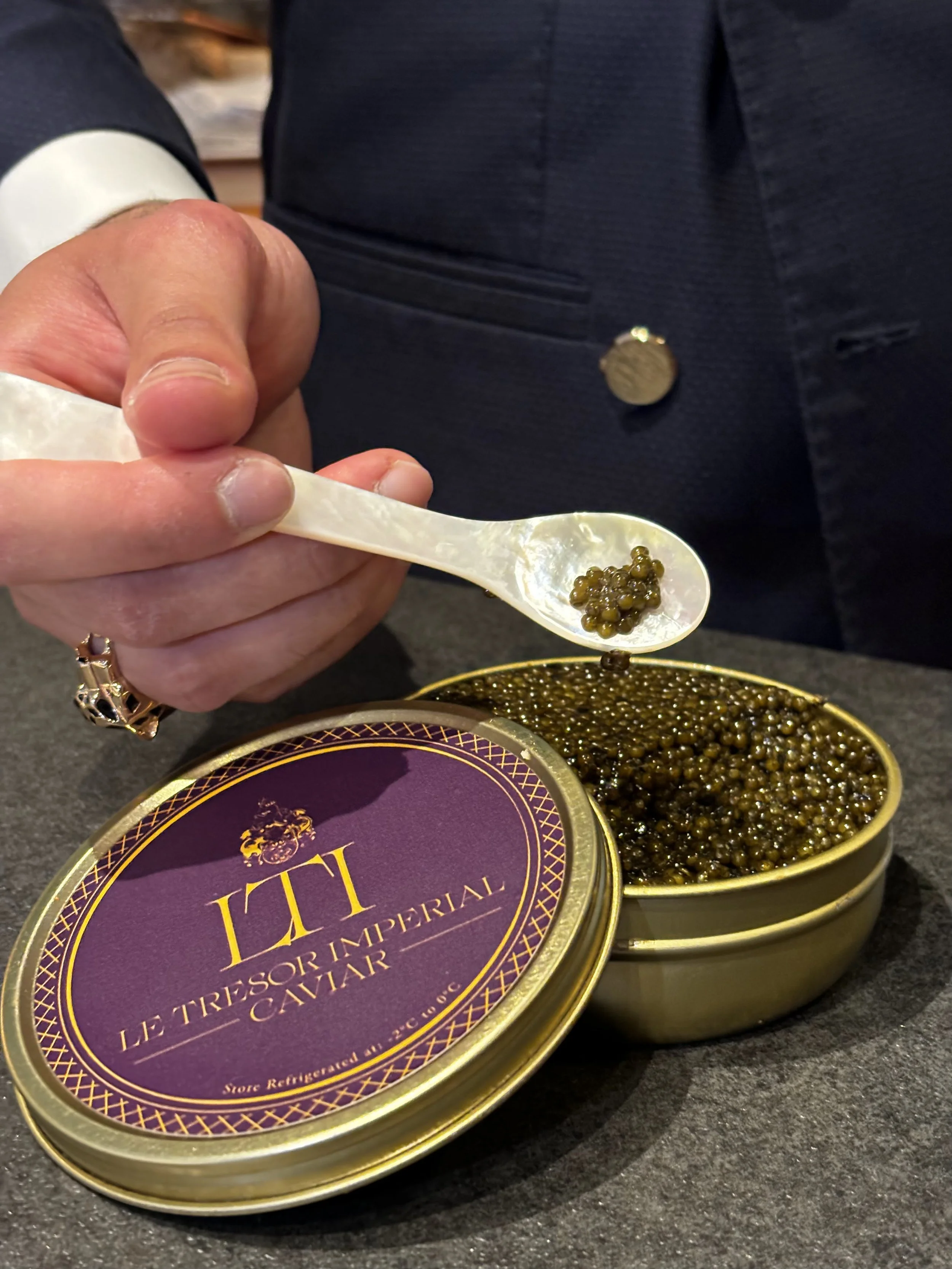
Le Tresor Imperial Caviar
The observation sounds simple until its implications begin to unfold. Home is rarely defined by luxury in the conventional sense. It is defined by ease, trust, and the assurance that things will work as they should without requiring constant attention. In a world where luxury is often associated with spectacle, Shahbaz’s restraint reveals something central to his approach. He is not interested in creating moments that merely impress. He is interested in designing experiences that remove friction so completely that clients are free to focus on living rather than managing.
That philosophy sits at the heart of Claves House, but it reaches beyond any single company. Shahbaz resists describing his ventures as separate accomplishments. There is little interest in presenting one business as more successful than another or elevating one brand above the rest. Instead, he returns to the larger architecture: a collection of highly specialized companies designed to serve the same clientele from different angles. What first appears to be a portfolio gradually reveals itself as something more cohesive, a network connected not simply by ownership but by a shared philosophy of service.
Building Through Observation
Many entrepreneurs like to describe themselves as innovators. Shahbaz rarely reaches for that word. Listening to him, one gets the sense that his work begins not with invention but with observation. Before building anything, he studies where systems begin to fail: the unnecessary complications, overlooked details, and quiet compromises that appear when quality is sacrificed for convenience or scale. Rather than asking what else can be added to the market, he asks what should no longer be tolerated.
That habit of attention eventually led to Claves House. Through his caviar business, Shahbaz had worked closely with ultra-high-net-worth individuals and noticed how many families relied on an expanding circle of advisors, concierge firms, specialists, and consultants. Each relationship solved a particular problem, yet together they created another. Clients found themselves managing the very services meant to simplify their lives. Instead of convenience, they inherited coordination. Instead of clarity, complexity.
His response was not to imitate existing concierge models but to question their assumptions. Why should specialized services remain disconnected from one another? Why should clients navigate multiple providers when those relationships could exist within a single trusted framework? These questions became the foundation of Claves House. Restaurant reservations at coveted establishments, acquisitions of fine art, educational opportunities, international trusts, asset management, and citizenship programs may appear unrelated at first glance. Shahbaz speaks about them with striking consistency. To him, they are not separate industries but variations on the same responsibility: anticipating needs before they become burdens.

Perhaps that is why our conversation rarely lingered on the products themselves. Whether discussing premium caviar, lifestyle services, or luxury experiences, Shahbaz redirected attention toward something less tangible. Excellence, in his view, is not defined only by what is delivered. It is defined by how seamlessly that delivery becomes part of a client’s life. The highest compliment is not admiration, but effortlessness: the quiet confidence that everything has already been taken care of.
The Cost of Building
A philosophy rooted in trust can sound, from a distance, as though it emerged naturally. For Shahbaz, it appears to have been forged as much by disappointment as by success. Like many founders, he learned early that a compelling idea is only as strong as the people willing to carry it forward. Some of his earliest collaborations, he recalls, never became the true alliances he had imagined. He mistook shared excitement for shared commitment. Experience taught him to tell the difference.
He tells the story without rancor. Rather than lingering on those who fell short, he frames the lesson as one of discernment. Building companies, he suggests, is not only a matter of spotting opportunity; it is also an education in character. Vision cannot sustain a business if the people around it disappear when certainty does. Over time, Shahbaz became more deliberate, more patient, and more selective about who is invited into the work. Trust, for him, is no longer granted on enthusiasm alone. It is earned through consistency, resilience, and the willingness to remain present after the glamour of a new venture gives way to the discipline of building.
He is equally unsentimental about the mythology of entrepreneurship. Popular culture prefers the dramatic markers: funding rounds, acquisitions, magazine covers, and the clean arithmetic of financial success. Shahbaz describes a quieter reality. Entrepreneurial life, as he sees it, is less a sequence of triumphs than a practice of endurance: solving one problem after another, treating doubt as a familiar visitor, and continuing to work without any guarantee that today’s effort will become tomorrow’s reward. The process, he says, reveals what a person is capable of only when comfort is no longer available.
That may explain why money occupies so little space in his account of success. Revenue, in his view, is not the purpose of a business but the evidence that something valuable has been built. Companies created solely in pursuit of profit, he believes, rarely endure because they begin with the wrong question. The harder task is to create something that deserves to exist. If the work is meaningful and the standard is high enough, the money follows.
The Measure of Excellence
Near the end of our conversation, I asked Shahbaz what would allow him, ten years from now, to look back and consider the journey worthwhile. His answer was revealing less for what it contained than for what it left out. There was no mention of private jets, valuations, or financial milestones. Instead, he spoke of recognition from the people most qualified to judge the work. Earning the respect of competitors, he said, would be the clearest sign that his companies had succeeded not through spectacle or circumstance, but through genuine excellence.
The answer distilled much of his philosophy. Again and again, Shahbaz returned to standards rather than scale: quality before visibility, craftsmanship before expansion, substance before acclaim. His advice to aspiring entrepreneurs followed the same logic. “Be bold,” he said, arguing that originality requires the courage to move beyond convention and resist the comfort of whatever happens to be fashionable. Authenticity, in this sense, is not a branding strategy. It is a discipline, one that begins in private long before it attracts public attention.
Entrepreneurship is often reduced to balance sheets, valuations, and portfolios. After speaking with Mohammad Ali Shahbaz, those measures feel incomplete. His companies are ambitious, certainly, but they also read as expressions of a more durable belief: that excellence begins with trust, that service should simplify rather than complicate life, and that lasting businesses are built not by chasing every opportunity, but by refusing to compromise on the standard they are meant to uphold.
Whether that vision expands through Claves House, Mr. Legacy, or ventures not yet imagined remains to be seen. What is already clear is that Shahbaz is pursuing something increasingly rare in contemporary business. In a culture captivated by speed, he argues for patience. In an age of visibility, he values credibility. And in an industry that often turns luxury into spectacle, he returns to a simpler, more exacting idea: the finest service should never leave clients thinking about the service at all. It should leave them thinking about the life it allowed them to enjoy.